
Our voice · Published piece
Who is taking care of women and girls during the COVID-19 pandemic?
Who is taking care of women during the COVID-19 pandemic?
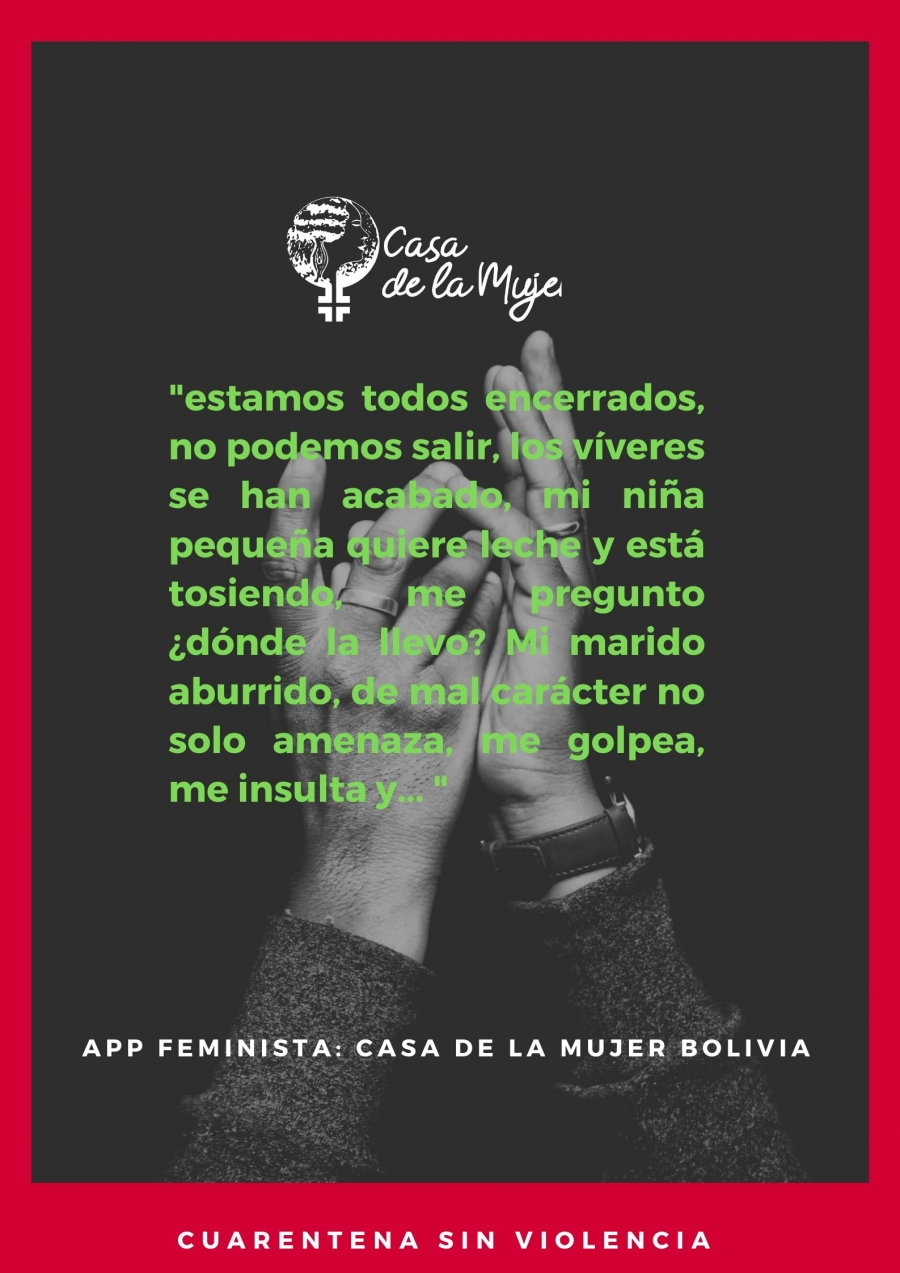
“I have 4 children, a teenager and 3 younger ones. My husband and I live in two rooms that are insufficient for the 6 of us. The worst part is that with the quarantine, we are all locked up, we cannot go out, the food has run out, my little girl wants milk and is coughing, I wonder where do I take her? My husband, bored and in a bad mood, not only threatens me, he hits me and insults me in front of the children, they cry and that's why he hits them too” (Testimony of a 35-year-old woman).
“I walked a long way and when I arrived at the FELCV, they refused to help me, saying they were busy with the coronavirus. Crying, I explained to them that before the coronavirus, my life was in danger because of the sexist violence of my partner” (Testimony of a 29-year-old woman).
“Madam, please attend to our needs, we no longer know what to do to feed the children. They say the president will give some baskets, how are we supposed to receive them?” (Testimony of a 47-year-old woman).
The first case involves mild reports that illustrate the risks faced by women trapped in mandatory confinement due to the deadly COVID-19 virus. This situation compels us not to forget the women, girls, and adolescents who experience fear of physical and/or sexual assault due to the insecurity generated by the current crisis. The quarantine and the declaration of a health emergency have intensified the risk of sexist and patriarchal violence. Furthermore, health systems are proving insufficient, lacking the resources and experience to cope with emergencies, let alone the coronavirus, in crisis situations.
Second, there is the persistent normalization of violence against women's bodies by institutions legally mandated to provide immediate assistance and protection to victims of gender-based violence. We see uniformed officers in the media unleashing their fury on passersby, who knows for what reasons or emergencies. What is happening to the FELCV (Special Force to Combat Violence against Women) that it is failing to fulfill its mission: to prevent violence and provide quality care, in accordance with due process, to victims of gender-based violence?
Third case, poverty: 70% of the population living on daily income do not agree with the stay-at-home restriction measure. This produces stress and anxiety due to the imminent loss of income and not knowing how to feed their families. This has happened in Riberalta, Beni, where the population took to the streets - in a pot-banging protest - demanding the easing of the stay-at-home measures, in order to continue generating the income that guarantees food for their families.
What is shameful about the episode in Riberalta is the response of the authorities who, instead of protecting the rights of the protesters, responded with aggression and incomprehension, forcefully attacking a hungry and desperate population. The worst part of the case is the determination of the District Attorney of Beni, Mirtha Mejía, who publicly stated that arrest warrants had been issued against six motorcycle taxi drivers "allegedly" responsible for the Riberalta protest, who bear the stigma of poverty and committed the crime of being poor, having hungry families, and standing with their class.
These people were simply demanding that the president fulfill her public commitments, as she had assured them that she would ensure the safety of women and families. Madam President, please know that safety begins with the fulfillment of the basic right to food. Know that in the face of the excesses committed by your ministers, which border on the authoritarianism typical of dictatorships, we are vigilant and will stand with those in need.
The testimonies are part of a series of complaints that arrive daily at Casa de la Mujer.
Casa de la Mujer
Psychological, legal, medical and social support from a feminist perspective in Santa Cruz de la Sierra.