
Our voice · Published piece
What is not said, what is not seen, never happened
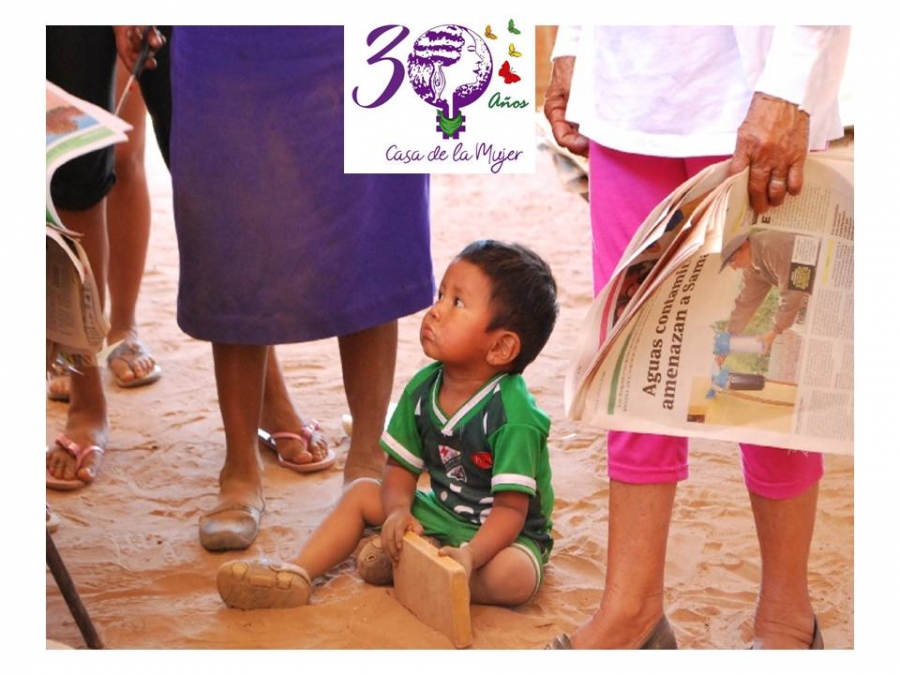
The story of a family in the Nuevo Amanecer neighborhood of Montero reflects the tragedy of many mothers and fathers who struggle between complying with health measures to prevent the spread of COVID-19 and sneaking out of the house to find something to stave off their children's hunger. This family had seven children, now six; one of the girls is being taken to the cemetery. She decided to stop feeling hungry after fighting with her older brother over a piece of sugarcane; she took her own life.
The mother told her neighbors that they hadn't eaten in days. With the pandemic underway and public policies that either never arrive on time or are insufficient, the family depended on the solidarity of their neighbors. It's not that the neighbors are wealthy or have resources; they are poor too. But they know the pain of hunger, they practice solidarity, each imagining the other's situation. They know that before the pandemic, filling the food basket required the whole family's help; today, they silently obey the safety measures without any way to get bread and milk each day. Most of the population in these neighborhoods doesn't have a secure salary (income); they work in the informal economy without any benefits, depending on daily wages.
The Covid-19 crisis is demonstrating the effects of social and economic inequalities on people's lives and how they serve the interests of large supermarkets that, although "under quarantine," never close, stifling small producers and benefiting the concentration of wealth in the hands of a few.
In Bolivia, a country of the poor, there are fortunes and "lucky" people who become millionaires in the blink of an eye. Remember the National Telecommunications Company ENTEL, an inexhaustible source of mismanagement and a mechanism for enriching officials in power; in Santa Cruz, the COTAS Telephone Cooperative, CRE; we could make a long list, but that's not the point. The aim is to show the two sides of the coin: 30% of the population, who peacefully enjoy their homes and families, while the other 70% know that staying home is not the solution, at least not for them.
The Santa Cruz Fiscal Justice Platform, some time ago, requested the government to adopt fiscal measures that close social gaps, arguing that people cannot be homogenized with a public policy that does not discriminate between "rich" people and people "in extreme poverty." Government fiscal measures have never been (are) neutral; they have many outstanding debts, such as the infant mortality rate, which will increase with the death of this girl from Montero; the denial of the right to health; the mockery by municipal authorities who send worm-infested food to medical and paramedical personnel; maternal mortality due to unsafe abortions; unemployment; gender-based violence; and a long etcetera.
Similarly, populations cannot be homogenized with a health prevention measure without recognizing the deep economic and social gaps that separate people. This is not a refusal to comply with health prevention measures, but rather the need for a broad, flexible policy based on a human rights approach that respects differences and, with a criterion of equity, adopts measures in line with reality; otherwise, people will die not from coronavirus, but from corona-hunger.
Casa de la Mujer
Psychological, legal, medical and social support from a feminist perspective in Santa Cruz de la Sierra.