
Our voice · Published piece
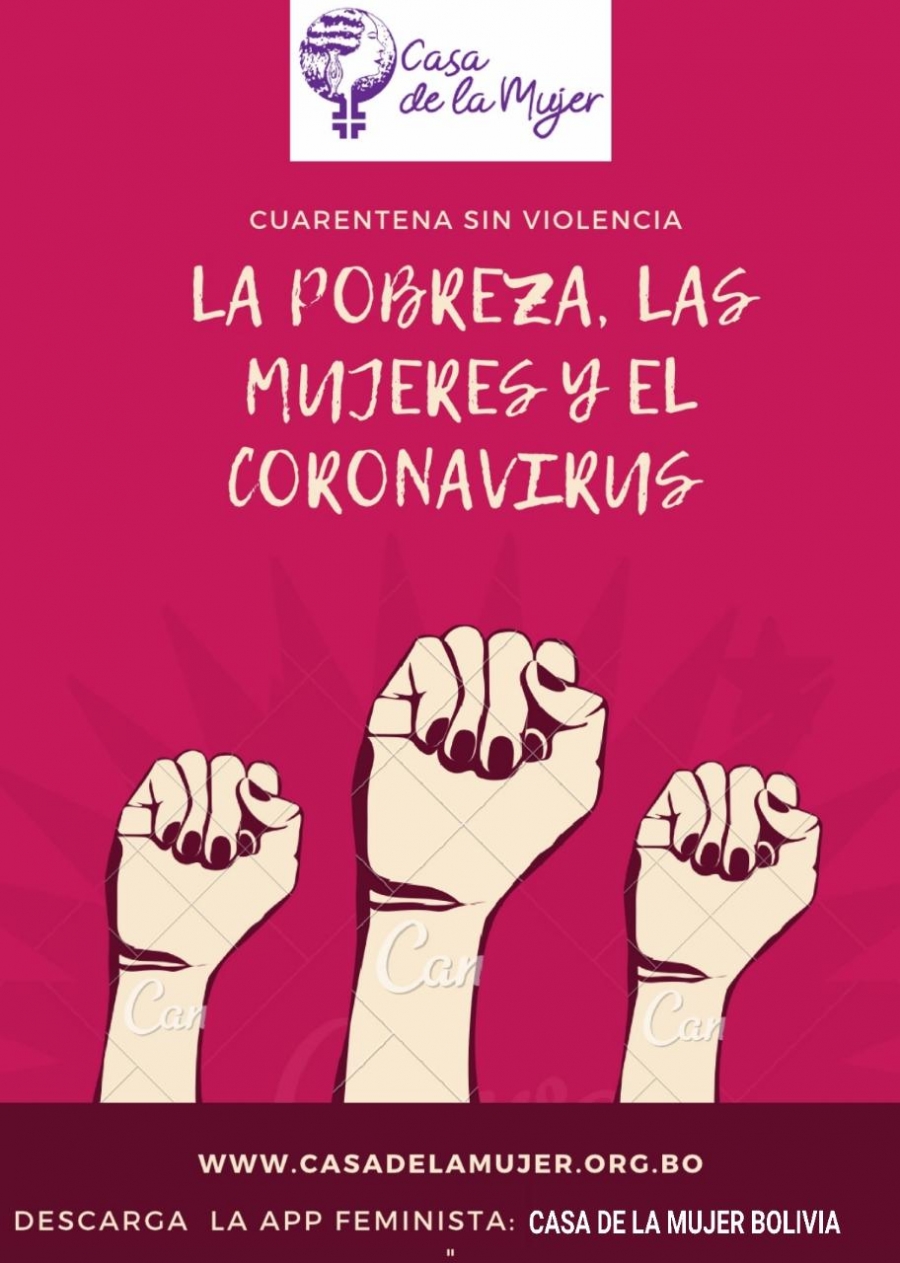
Poverty, women, and the coronavirus.
Miriam Suárez Vargas
Women's Center
Although numbers can be a bit cold when trying to understand reality, they help to put into perspective the magnitude of the problems and the solutions that must be undertaken to overcome them. I know I could start with the number of people affected by the coronavirus in Santa Cruz and the country, but all the media and social networks are already doing that, leaving no room for hope. I want to emphasize the gaps created by this coronavirus and the government's insufficient measures to prevent it, without condemning the poor to even greater poverty.
According to ECLAC, Bolivia has 11.3 million inhabitants, of which 3.9 million are poor (35%). The same organization reports that 61% of its inhabitants live on $2 a day, which they manage through informal and insecure jobs, which also reinforce multidimensional poverty, expressed mainly in gender violence, among other manifestations.
The National Confederation of Micro and Small Businesses (Conamype) warns that at least 60% of workers in its sector could lose their jobs as a result of the quarantine. There are 600,000 micro-enterprises in the country, employing 1.5 million workers. This sector is now inactive and therefore unable to meet its basic needs, consequently exacerbating inequalities. The shutdown of micro and small businesses not only inhibits economic growth but also plunges entrepreneurs into greater poverty due to unmanageable debts and bank loans.
According to the UN, poverty figures are even harsher when it comes to women: 70% of them work in the informal sector (domestic workers, market vendors), and 33.9% of Bolivian families are headed by women. Considering the double and triple burdens women bear, the increase in inequality, long hours of caregiving, and the need to find ways to make ends meet—the "feminization of poverty"—is particularly noteworthy, as being a woman is the most influential factor in poverty.
Faced with this reality, the coronavirus arrives, along with the president's declarations of quarantine and a health emergency ordering people to stay home. The measure is obeyed with or without the will of the people, and anyone who dares to go out—as ordinary people say, to find something to put on the table—will suffer the consequences of their disobedience. What is this? Institutionalized terror. Understand that Bolivians can die from the coronavirus as well as from anemia. In Bolivia, people die from dengue fever, malaria, respiratory infections, tuberculosis, and unsafe abortions (the third leading cause of maternal mortality). Ms. Añez, tone down your threats, deliver the promised food baskets before it's too late, and have some respect for the poor who are the wealth of the Plurinational State.
Casa de la Mujer
Psychological, legal, medical and social support from a feminist perspective in Santa Cruz de la Sierra.