
Our voice · Published piece
During quarantine, eating became subversive.
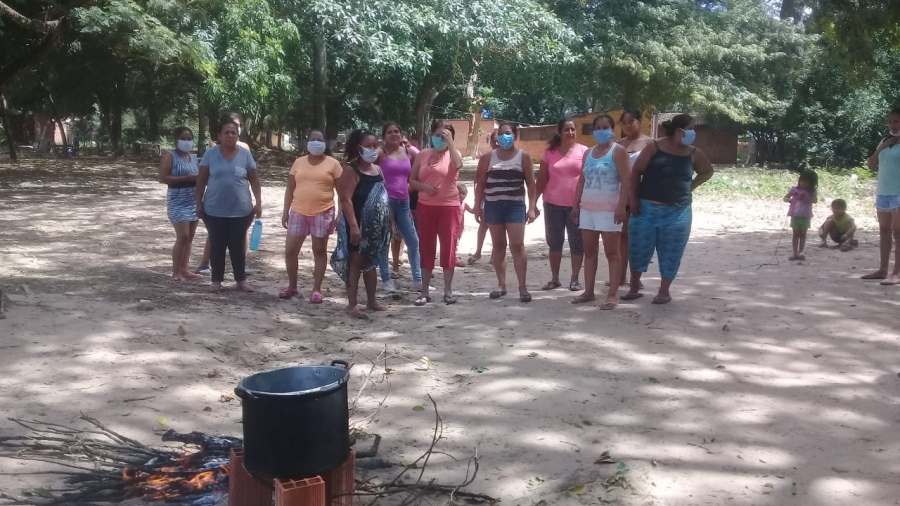
In the department of Santa Cruz and many other areas of the country, the sight and sound of empty pots is becoming commonplace. Families, communities, and entire neighborhoods have been forced to take to the streets and make their voices heard, expressing the desperation that comes from knowing there is neither food nor money to buy it, thus depriving them of the fundamental right to food.
The images show families living in the Las Cabañitas neighborhood of Santa Cruz de la Sierra, who can no longer endure this quarantine and are displaying their empty pots as a sign of protest, demanding that local, regional, and national authorities address this basic need. In other neighborhoods, residents have chosen to come together and prepare communal meals as a gesture of solidarity and group empathy, but unfortunately, it is not enough.
It is evident that the Bolivian transitional government decided to venture into ordering a quarantine to deal with the Coronavirus pandemic, without first planning its health care actions for the prevention and recovery of those who acquire this virus, nor did it establish a plan to provide food assistance to those families with limited resources who live from day to day.
It was simply decided to order families to stay in their homes, practically forcing them to choose between two options: "either you die from coronavirus or "either you die of hunger." This situation has led to rebellion among a large part of the population who, day after day, tie their hopes to their feet and go out into the streets to find ways to survive and bring food to their homes.
Under these conditions in Bolivia today, “eating has become subversive” and practically an act of provocation against the government, since instead of providing food, the government insists on offering jail time to those who dare to demonstrate and demand that they be provided with food.
We would like to understand what the sound of empty pots means to the government. What does it mean to you? How do you feel when you hear and see the desperation of the people you claim to govern?
Radio Alternativa 103.0 fm. Communications arm of Casa de la Mujer
Casa de la Mujer
Psychological, legal, medical and social support from a feminist perspective in Santa Cruz de la Sierra.